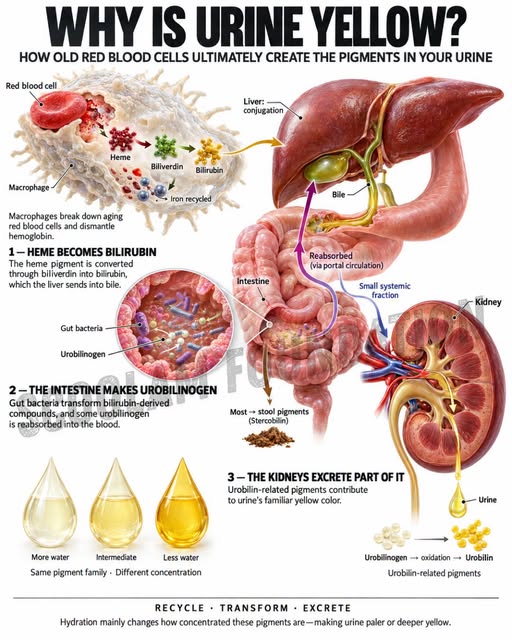
Dark yellow or amber urine commonly indicates that your urine is concentrated.
This can happen after exercising, spending time in hot weather, sleeping overnight, or simply not drinking enough.
In many cases, increasing your fluid intake causes the color to become lighter.
If dark urine persists despite adequate hydration, however, it deserves more attention.
Orange Urine
Orange urine can have several explanations.
Dehydration can make urine appear orange or intensely yellow.
Certain medications, vitamins, supplements, and food dyes can also change its appearance.
Less commonly, orange or dark urine can be associated with problems involving the liver or bile ducts.
If orange urine occurs alongside yellowing of the skin or eyes, abdominal pain, or unusually pale stools, medical evaluation is important.
Pink or Red
Pink or red urine can sometimes be caused by foods such as beets or certain berries.
But red or pink urine can also mean blood is present.
Blood in the urine may occur with urinary tract infections, kidney stones, irritation, or other urinary conditions.
Because you cannot reliably determine the cause simply by looking at the color, unexplained red or pink urine should be discussed with a healthcare professional.
Brown
Brown urine can occur with significant dehydration.
Certain medications and foods can also contribute.Food
However, brown or cola-colored urine can sometimes be associated with liver problems, kidney problems, muscle injury, or other medical conditions.
If the color doesn’t improve with hydration, it’s worth getting checked.
Blue or Green
Blue or green urine is unusual.
Sometimes medications, medical dyes, food coloring, or supplements are responsible.
Certain infections and uncommon medical conditions can also cause unusual colors.
If you haven’t recently taken something that could explain the change, medical advice is appropriate.
When Should You Be Concerned?
see more…