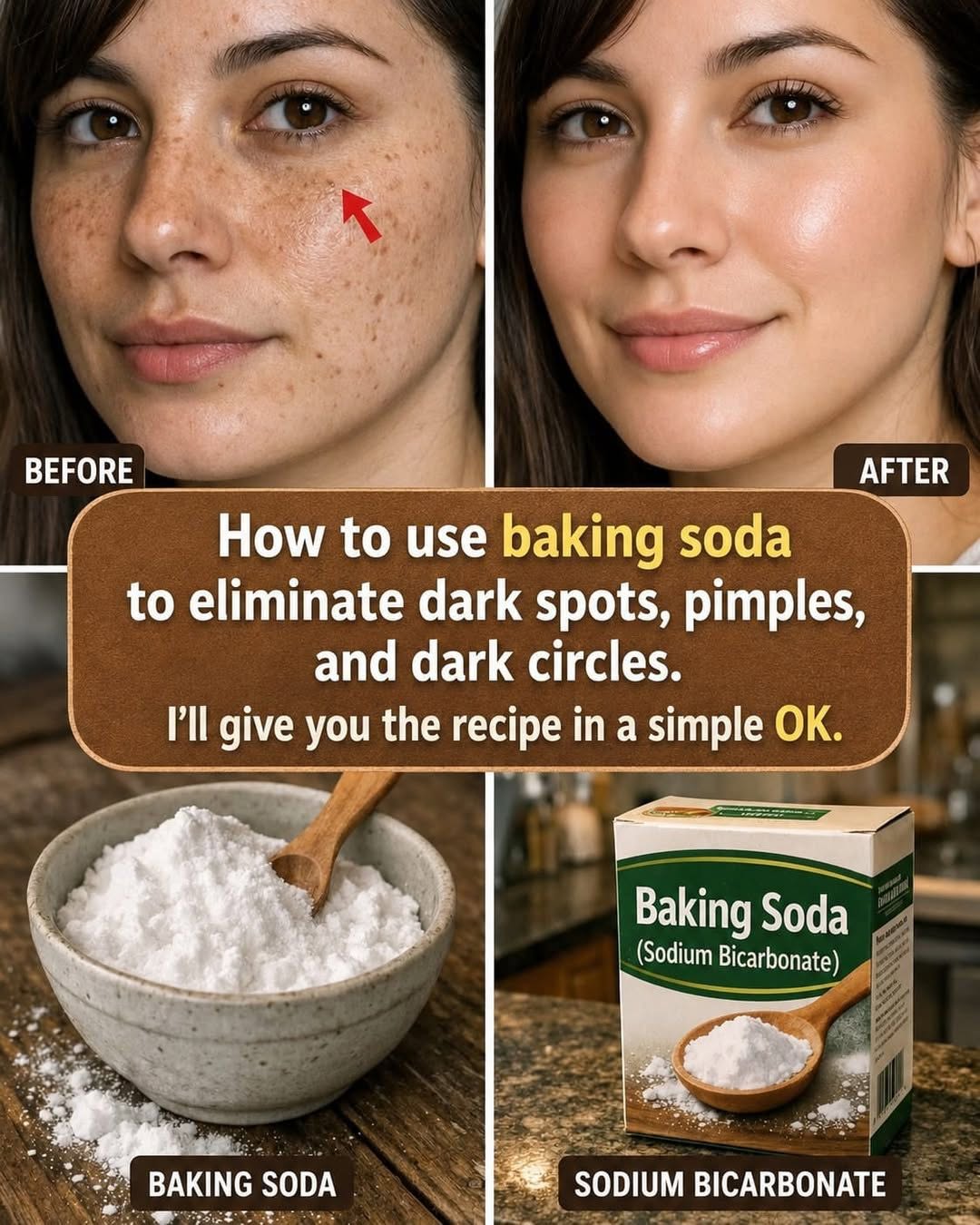
Baking soda ( sodium bicarbonate) is a common household ingredient that has become popular in DIY skincare. Social media often claims it can eliminate dark spots, acne, and even under-eye circles. While baking soda does have mild cleansing and exfoliating properties, there is little scientific evidence that it can safely treat these skin concerns, and using it incorrectly may do more harm than good.
If you’re considering using baking soda on your face, it’s important to understand both its potential benefits and its risks.
What Is Baking Soda?
Baking soda is an alkaline powder with a pH of around 8–9, while healthy skin has a naturally acidic pH of about 4.5–5.5.
This acidic environment helps protect the skin from harmful bacteria, irritation, and moisture loss.
Frequent use of baking soda can disrupt this protective barrier.
Possible Benefits
Although evidence is limited, baking soda may offer a few temporary benefits when used cautiously.
1. Mild Exfoliation
A gentle paste may help remove dead skin cells, leaving the skin feeling smoother.
However, excessive exfoliation can damage the skin barrier.
2. Oil Removal
Because baking soda is alkaline, it can temporarily remove excess oil from the skin.
For people with oily skin, this may create a cleaner feeling, but overuse may actually trigger the skin to produce more oil.
3. Surface Cleansing
Baking soda can help remove dirt and residue from the skin’s surface, but it should not replace a gentle facial cleanser.
Can Baking Soda Remove Dark Spots?
There is no strong scientific evidence that baking soda fades dark spots or hyperpigmentation.
Dark spots usually improve with ingredients that have been studied for this purpose, such as:
Niacinamide
Vitamin C
Azelaic acid
Retinoids
Sunscreen
Can It Treat Acne?
Baking soda is not a recommended acne treatment.
Although it may dry out pimples temporarily, it can also:
Irritate the skin
Damage the skin barrier
Increase redness
Cause dryness and peeling
Dermatologists generally recommend proven acne treatments instead, such as benzoyl peroxide, salicylic acid, or adapalene, depending on the individual’s needs.
Can It Remove Dark Circles?
No.
Dark circles under the eyes may result from:
Genetics
Lack of sleep
Allergies
Aging
Thin skin
Blood vessels showing through the skin
Applying baking soda near the eyes is not recommended, as it can cause significant irritation.
Risks of Using Baking Soda on the Face
Possible side effects include:
Dryness
Burning
Redness
Irritation
Peeling
Increased sensitivity
Damage to the skin’s protective barrier
People with sensitive skin, eczema, or rosacea should avoid using baking soda on the face.
If You Choose to Try It
Because of the potential for irritation, baking soda should not be part of a regular skincare routine. If you still decide to use it, do so cautiously.
Ingredients
1 teaspoon baking soda
2 teaspoons water
Step 1
Mix the baking soda and water into a thin paste.
Step 2
Perform a patch test by applying a small amount to the inside of your forearm.
Wait 24 hours to check for redness or irritation.
Step 3
If no reaction occurs, apply a very thin layer to the face, avoiding the eyes and lips.
Step 4
Leave it on for no more than 30–60 seconds.
Step 5
Rinse thoroughly with lukewarm water.
Step 6
Apply a gentle, fragrance-free moisturizer immediately afterward.
Do not use more than once every few weeks, if at all.
Better Alternatives for Healthy Skin
For common skin concerns, these options have better evidence for safety and effectiveness:
For Dark Spots
Daily broad-spectrum sunscreen (SPF 30 or higher)
Vitamin C serum
Niacinamide
Azelaic acid
For Acne
Salicylic acid
Benzoyl peroxide
Adapalene (where appropriate)
Gentle, non-comedogenic cleanser
For Dry Skin
Ceramide-based moisturizer
Hyaluronic acid
Glycerin
Petrolatum for very dry areas
When to See a Dermatologist
Seek professional advice if you have:
Persistent acne
Painful cysts
Dark spots that change in appearance
Severe irritation after using skincare products
Skin conditions that do not improve with over-the-counter treatments
Final Thoughts
Baking soda may provide mild exfoliation and temporarily remove excess oil, but it is not a proven treatment for dark spots, acne, or dark circles. Because it is highly alkaline, frequent use can disrupt the skin’s natural protective barrier, leading to irritation, dryness, and increased sensitivity.
For healthier, long-lasting results, focus on a gentle skincare routine, daily sunscreen, and products that are supported by scientific evidence. If you have persistent skin concerns, a dermatologist can recommend treatments that are both safe and effective for your skin type.