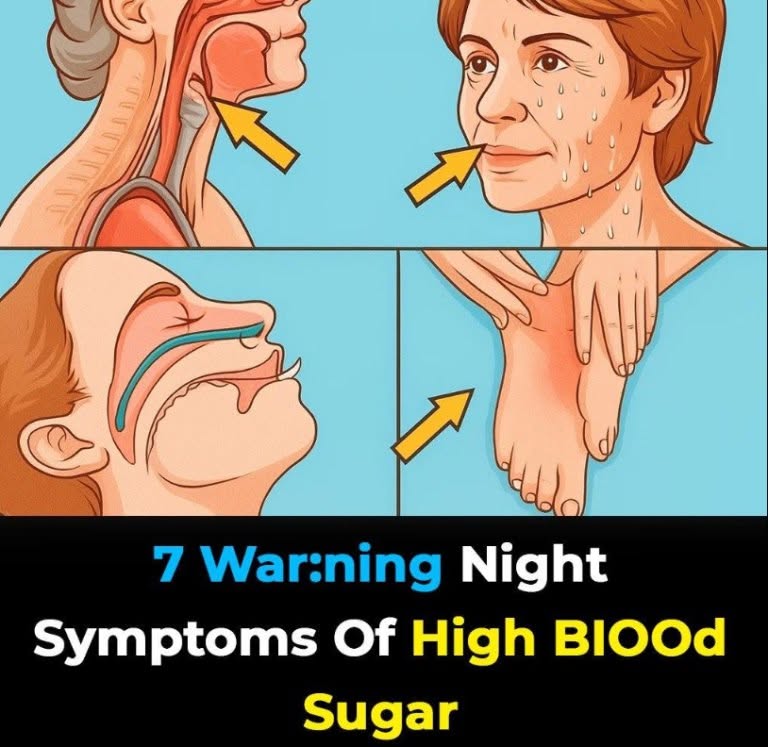
Sweating at night can have many causes. It is often linked with room temperature, blankets, hormones, infections, stress, or medications. In people who already have diabetes, sweating at night can sometimes be related to blood sugar changes, including low blood sugar from certain diabetes medicines.
However, some people with unstable blood sugar may notice unusual sweating, waking suddenly, or feeling uncomfortable at night.
The American Diabetes Association explains that low blood glucose symptoms can include sweating, a pounding heartbeat, anxiety, and tingling, and nighttime episodes may be harder to notice while asleep.
If you already take diabetes medication and wake up sweaty, shaky, confused, or extremely hungry, ask your healthcare professional what to do and whether nighttime glucose checks are needed.
5. Blurry Vision at Night or on Waking
High blood sugar can affect the fluid balance in the eyes, which may cause blurry vision. Some people notice this more at night when reading a phone, looking at lights, or waking up in the morning.
The CDC and NIDDK both list blurry vision as a common diabetes symptom.
NIDDK also notes that increased thirst, urination, tiredness, unexplained weight loss, and blurred vision can be symptoms of diabetes.
Blurry vision can also come from eye strain, dry eyes, poor sleep, migraine, or vision problems. But new or repeated blurry vision should be evaluated, especially if it appears with thirst and frequent urination.
6. Tingling, Burning, or Numb Feet at Night
At night, foot symptoms can feel more noticeable because you are lying still. Some people feel tingling, burning, numbness, pins and needles, or discomfort in the toes or feet.
Over time, high blood sugar can affect nerves. Mayo Clinic notes that tingling and loss of sensation or numbness can happen in the hands and feet of people with diabetes.
Foot symptoms can also be caused by vitamin deficiencies, circulation problems, back issues, nerve compression, thyroid disease, or medications. But if tingling or numbness keeps happening, it is worth getting checked.
7. Morning Fatigue, Headache, or Brain Fog
If high blood sugar interrupts sleep, causes dehydration, or leaves the body struggling to use glucose properly, you may wake up tired, foggy, or with a headache. This can happen even after spending enough hours in bed.
Mayo Clinic lists tiredness and headache among possible symptoms of hyperglycemia. The CDC also includes fatigue among common diabetes symptoms.
Morning fatigue is common and can have many causes, including poor sleep, stress, sleep apnea, anemia, depression, or thyroid problems. But when fatigue appears with nighttime urination, strong thirst, blurry vision, or foot tingling, blood sugar testing is a smart step.