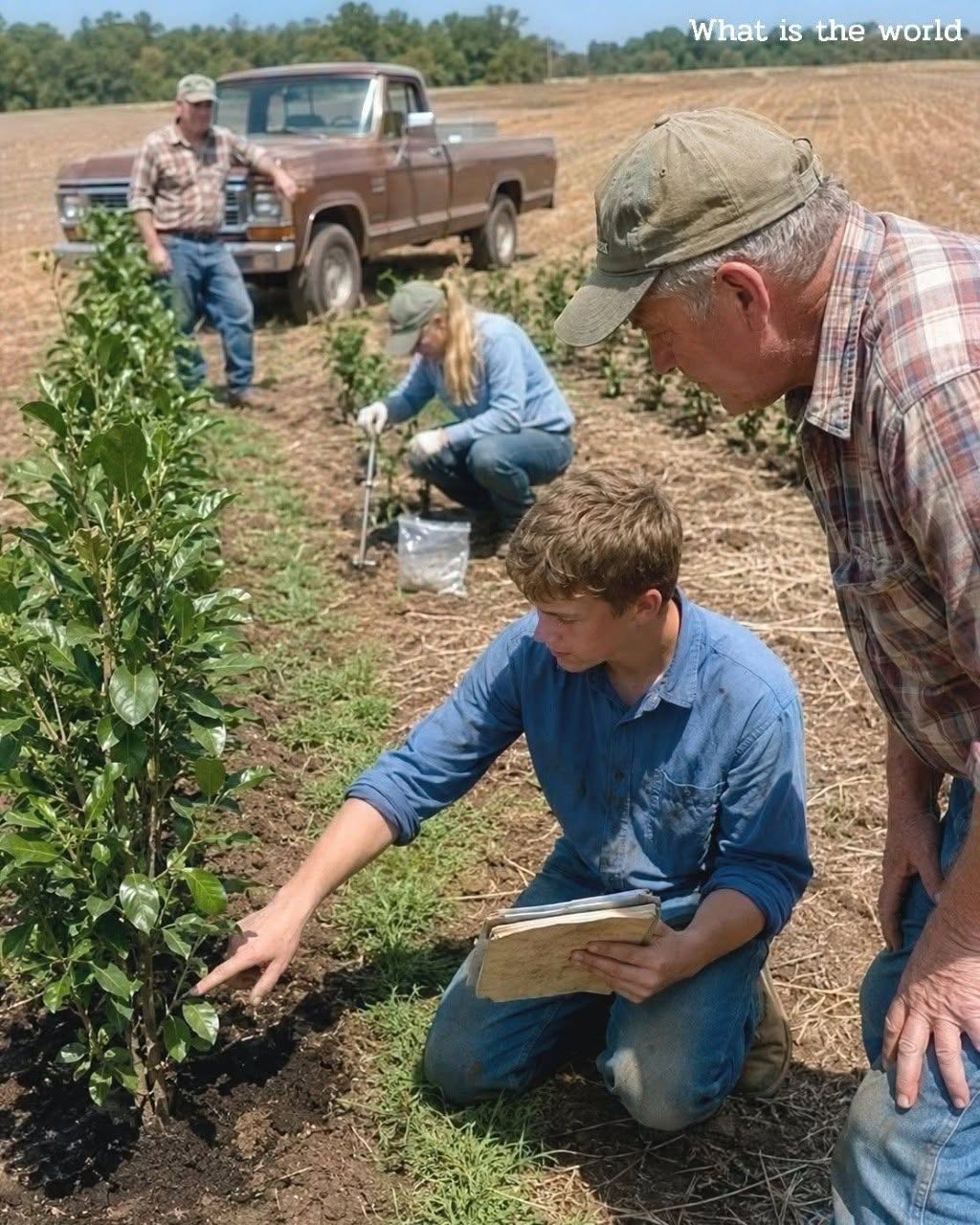
People in Millbrook County stopped bringing it up around the third summer.
Not because they had forgotten.
Because by then, the evidence was standing in a straight green line across the Callaway farm, and every person who had laughed at James Callaway could see it from the road.
Promoted content
Three years earlier, he had been a quiet fourteen-year-old with a shovel, a bent notebook, and a plan adults kept mistaking for foolishness. He lived outside Millbrook, Tennessee, at the end of a two-lane county road where his family’s twelve acres sat tired and open under the sun. The land had been worked the same way for decades. Corn and soybeans. Tillage. Chemicals. Hope in March. Worry in August. The topsoil was thin over clay hardpan, and the old creek bed behind the farm had not carried real water in so long that younger kids in town thought “creek” was just what people called the dip in the ground.
James noticed things other people walked past.
He noticed how rain did not sink in.
e noticed how wind pushed across the western field with nothing to slow it.
Promoted content
He noticed the bare northeast corner where the soil looked paler every year.
And because he was quiet, people assumed noticing was all he did.
At school, James was not popular or dramatic. He read at lunch. He checked out books from the county library that most adults would have found too dry to finish. Agroforestry. Windbreak design. Riparian buffers. The Dust Bowl. He learned that the Dust Bowl had not been only bad weather. It had been land management failing so badly that weather turned it into disaster. He read about the shelterbelt project that planted millions of trees to hold soil in place, and he sat with that fact longer than most boys his age would have sat with anything.
By thirteen, he had begun his own field records.
Promoted content
Not fancy records.
Real ones.