Was he hiding debts?
Had he simply become overwhelmed?
Had he looked at me one morning and decided I was not worth staying for?
That last question hurt the most.
For years, I believed I had not been enough.
There Was Never Room for Another Man
A few men expressed interest in me during those early years.
A neighbor invited me to dinner.
A coworker asked whether I would like to see a movie.
A friend of Derrick’s baseball coach once met me for coffee.
The conversation went well until he asked about my family.
“I have ten children,” I said.
He nearly dropped his cup.
“Ten?”
“Yes.”
“All living with you?”
“Yes.”
He stared at me as though I had announced that I kept ten tigers in my living room.
He never called again.
Eventually, I stopped trying.
My evenings were filled with homework, baths, lunch preparation, school forms, bedtime prayers, fevers, worries, and whispered conversations with children who needed help understanding the world.
I never married.
I never dated seriously again.
But I was not empty.
My life was overflowing.
They Grew into People I Was Proud to Know
The years passed more quickly than I expected.
Amanda became a pediatric nurse. She had spent so much of her childhood caring for younger siblings that caring for children seemed written into her heart.
Derrick opened his own auto repair shop.
Sue became a third-grade teacher, where she used her endless energy and expressive storytelling to make children love learning.
Jacob and David became engineers. They continued competing over everything, including promotions, lawn care, and whose children earned better grades.
Tom and the other quadruplets built lives and families of their own.
Sophie became a social worker.
One afternoon, she sat across from me in the kitchen and explained why she had chosen that path.
“I wanted to become the person for frightened children that you were for us.”
After she left, I cried for nearly an hour.
My parents remained distant for many years.
My mother called every Christmas, asking the same painful question.
“Are you still doing this?”
And I always answered the same way.
“They are my children.”
Eventually, I stopped trying to make her understand.
I had learned that family was not decided only by blood.
Family was also built from packed lunches, sleepless nights, sacrifices, forgiveness, and the decision to remain when leaving would have been easier.
Thirty Years Later
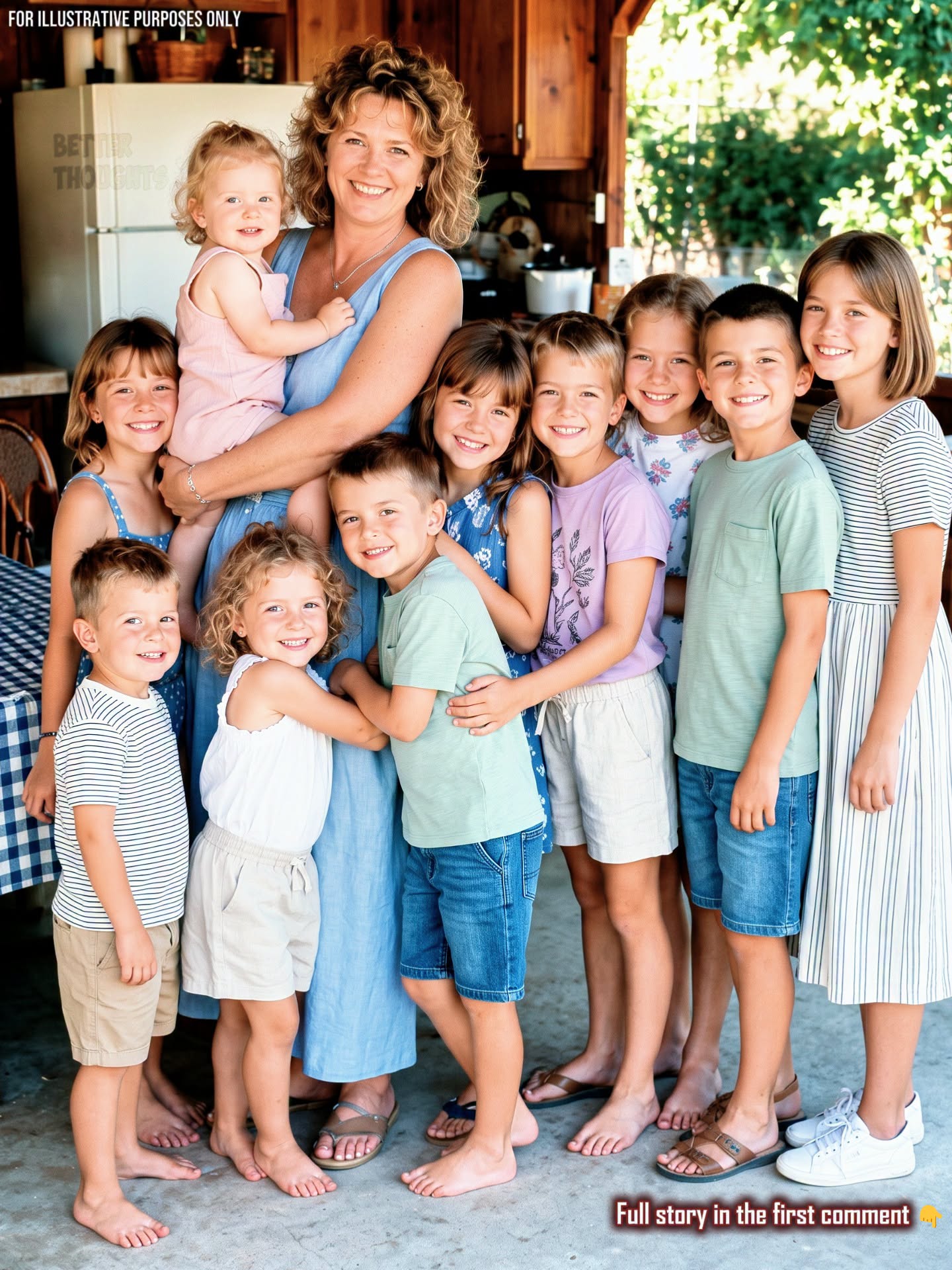
By the time thirty years had passed, the quiet house I had once feared losing was noisy again every weekend.
My children returned with spouses, grandchildren, stories, and containers of food.
The dining table was never large enough.
Someone was always searching for an extra chair.
Someone was always arguing about football.
Derrick repaired things I had not asked him to repair.
Amanda ordered me to sit down and rest.
Sue organized everyone.
Jacob and David debated everything.
Sophie stayed close to me, even when the room was full.
Then came the knock.
Then came Mr. Johnson.
Then came the envelope.
I unfolded the letter while all ten of my children watched.
Robert began by explaining that he had been sick for months before our wedding.
The headaches, weight loss, exhaustion, and pain had not come from working too hard.
One week before we were supposed to marry, doctors told him he was seriously ill.
They believed he might have only months to live.
There was an experimental treatment available, but the doctors could not promise it would help.
Robert wrote that fear had taken over.
He imagined marrying me and leaving me widowed shortly afterward.
He imagined ten grieving children, medical expenses, legal complications, and a future buried beneath debt.
He convinced himself that disappearing would spare us from watching him become ill.
He admitted that the note he left had been deliberately cold.
He believed cruelty would make it easier for me to hate him, forget him, and move forward.
At that point, I had to stop reading.
My chest tightened.
For thirty years, I had interpreted that note as proof that he did not love us.
Now I was learning he had written it because he believed love required him to disappear.
Sophie reached for my hand.
“Keep reading, Mama,” she whispered.
So I did.