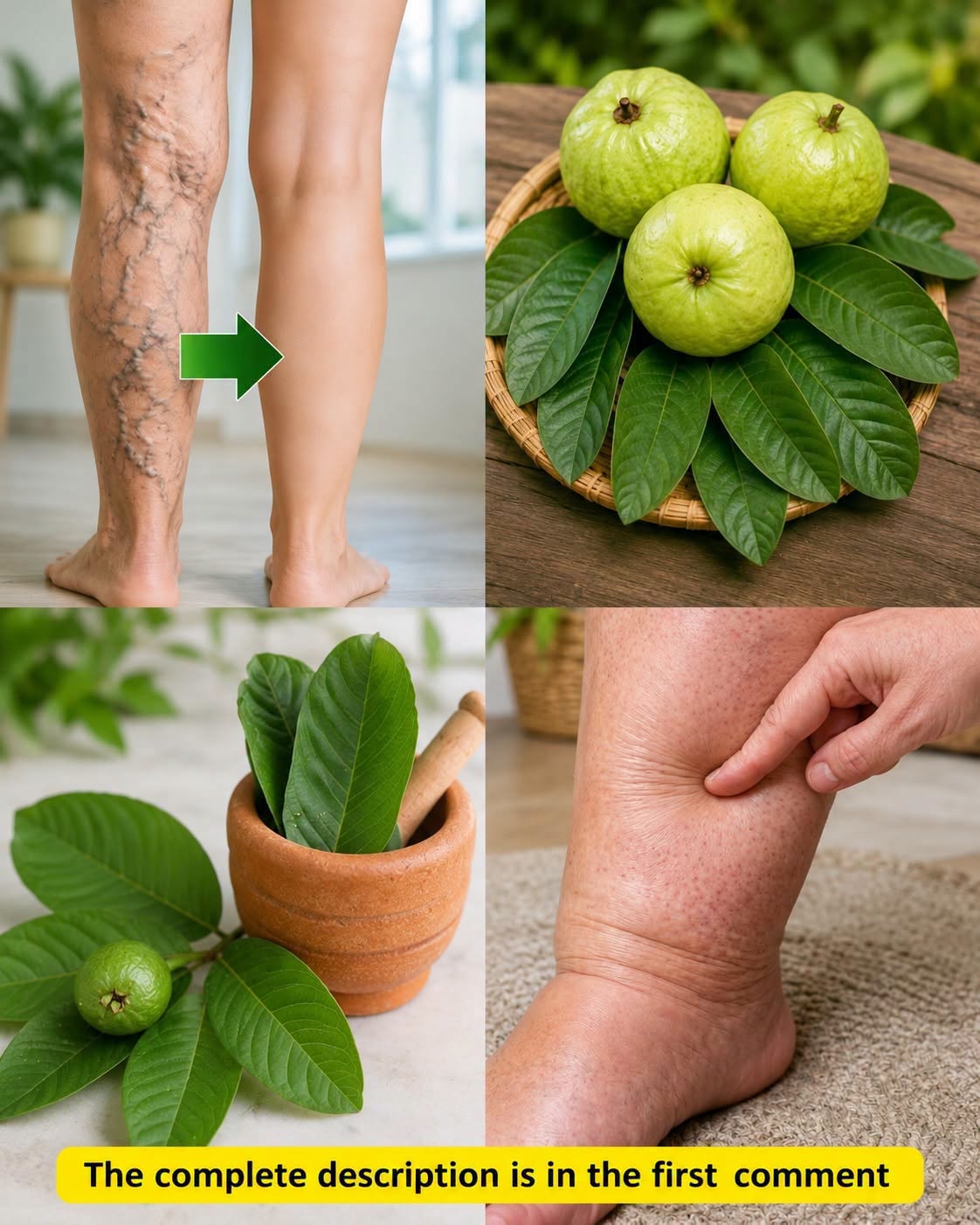
Have you ever noticed sock marks lingering around your ankles at the end of the day? Or perhaps your feet feel puffy after a long flight, a salty meal, or hours of standing?
Occasional water retention and feelings of heaviness in the legs are common experiences for many people. While staying active, drinking enough water, and maintaining a balanced diet remain essential, some traditional herbal remedies have also attracted attention for their supportive role in everyday wellness.
One such remedy comes from a tree that grows in tropical regions around the world: the guava tree.
For generations, guava leaves have been used in traditional wellness practices throughout Asia, Latin America, and other parts of the world. Today, researchers continue to explore the plant compounds naturally present in these leaves and their potential role in supporting overall well-being.
Let’s take a closer look at why guava leaves remain a popular herbal choice and how they can be incorporated into a healthy lifestyle.
🌱 Why Are Guava Leaves So Popular?
Guava leaves (Psidium guajava) contain a variety of naturally occurring plant compounds and nutrients, including:
✔ Quercetin – a flavonoid known for its antioxidant properties
✔ Catechins – plant compounds also found in green tea
✔ Gallic Acid – a naturally occurring antioxidant
✔ Natural Vitamin C – important for immune and vascular support
✔ Potassium – a mineral involved in maintaining normal fluid balance
These compounds help explain why guava leaves have been valued in traditional wellness practices for centuries.