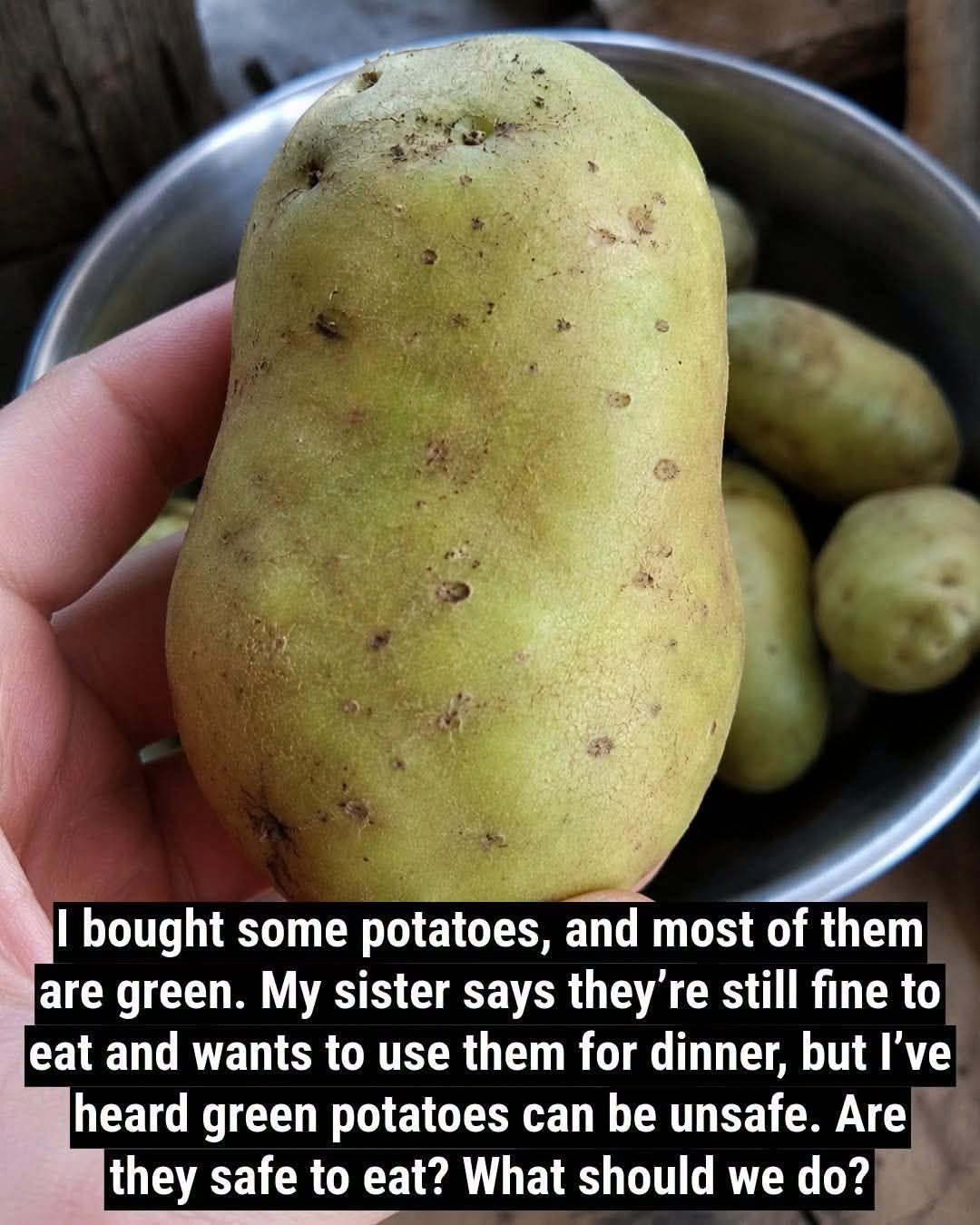
This is a genuinely good question to ask before dinner, not after — and the honest answer is: it depends on how green we’re talking, and neither of you is completely right or wrong.
Why Potatoes Turn Green in the First Place
Green potatoes are a light exposure problem, not a spoilage problem. Potatoes are meant to grow underground in total darkness. When they’re exposed to light — sitting on a counter, under store lighting, or even just piled near a sunny window — their skin starts producing chlorophyll, the same green pigment in leaves. That chlorophyll itself is completely harmless; it’s just what makes plants green in general.
The real issue is that light exposure also triggers the potato to ramp up production of solanine (and a related compound called chaconine), natural toxins the plant produces as a defense mechanism. The green coloring and the rising toxin levels tend to happen together, which is why greening skin is used as a visual warning sign — but the color itself isn’t the danger. It’s a marker for what’s happening underneath.
What Solanine Actually Does
Solanine is a neurotoxin, and eating enough of it can cause real symptoms: nausea, headaches, abdominal pain, diarrhea, and in more serious cases, neurological effects. It has a distinctly bitter taste and can cause a burning sensation in the mouth or throat — which is actually a useful built-in warning system, since most people naturally stop eating something that tastes that unpleasant before consuming a dangerous amount. Cooking does not destroy solanine, so frying, boiling, or baking a green potato won’t neutralize the toxin — heat just isn’t enough to break it down.