So Are They Safe or Not?
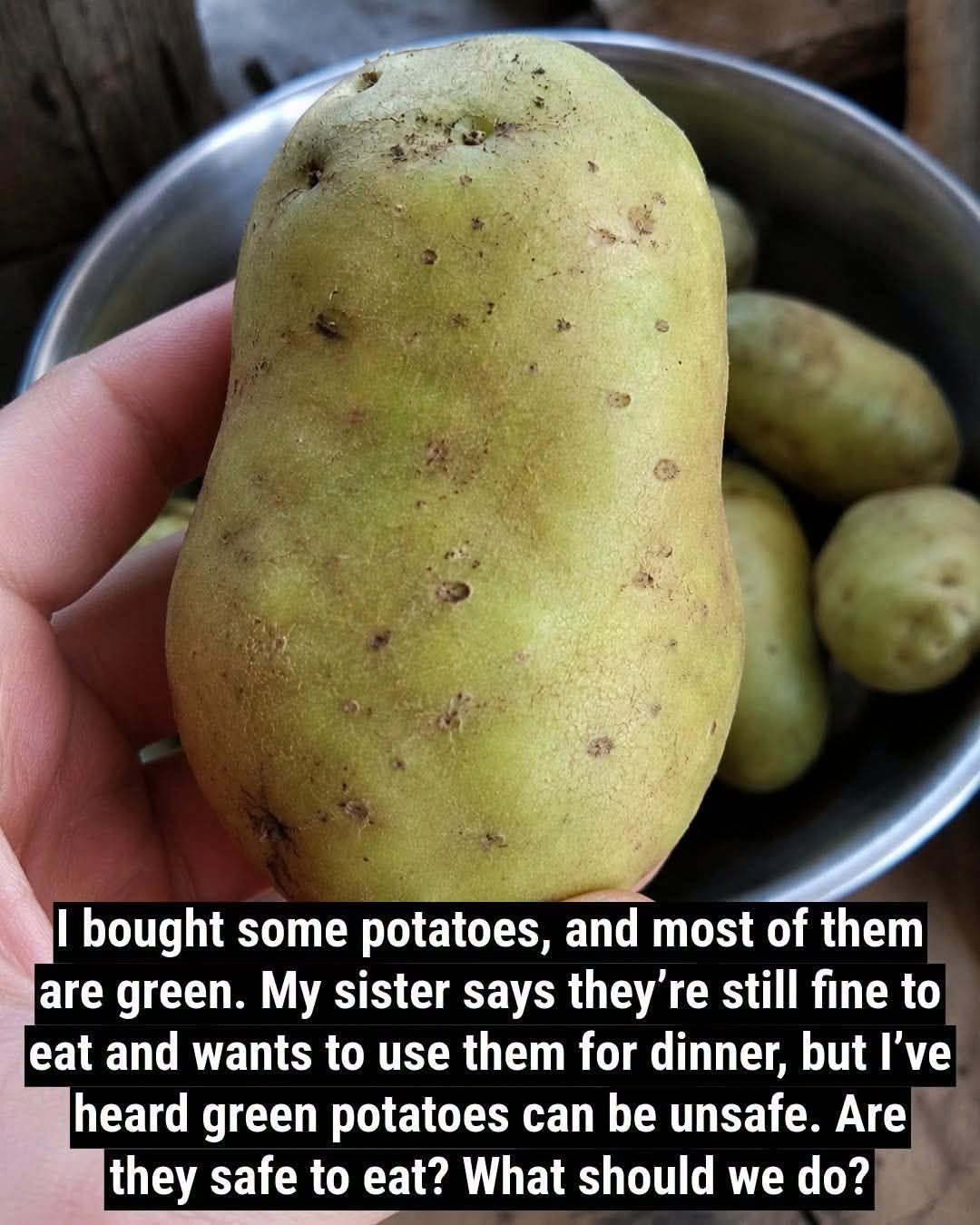
Based on the photo, this potato isn’t just lightly tinged — it’s extensively green across most of its surface, and there appear to be several others in the bowl in similar condition. That matters, because the guidance changes depending on severity:
A potato with a few small green patches or spots: Generally considered safe once you cut away all the green parts, along with any eyes or sprouts, cutting a bit deeper than the green actually appears to go.
A potato that’s extensively or deeply green, like the one pictured: Multiple food safety sources — including Michigan State University Extension and the National Capital Poison Center — recommend simply throwing these out rather than trying to salvage them. When green coloring covers most of the potato, there’s no reliable way to trim around it and be confident you’ve removed enough of the toxin, especially since solanine can extend well beyond the visibly green flesh.
The Real-World Risk
To be fair to your sister, actual solanine poisoning from home cooking is uncommon — the bitter taste tends to make people stop eating before they consume a genuinely dangerous dose, and documented cases usually involve eating a substantial amount of heavily green potato at once (one commonly cited reference point: roughly a full pound of solidly green potato can be enough to make a small adult ill). That said, “uncommon” isn’t the same as “risk-free,” and there’s no way to precisely gauge solanine concentration just by looking at a potato.
A few extra considerations worth weighing:
Children are more vulnerable to solanine poisoning due to their smaller body size, so green potatoes should never be served to kids, trimmed or not.
A bitter taste or burning sensation while cooking or eating is a hard stop — that’s a sign of high solanine even in a potato that doesn’t look particularly green.
What I’d Actually Do With These
For a potato this extensively green, the safest call is to toss it rather than trim it — the coloring is too widespread to trust that cutting around it removes enough of the toxin. Any potatoes in the bowl with only minor green spots can likely be salvaged by peeling and cutting well past the discolored area. Going forward, storing potatoes in a cool, dark place (a paper bag in a pantry or cupboard, not a clear bag on the counter) prevents this from happening in the first place.
Nobody’s being dramatic by tossing them, and nobody’s being reckless by trimming a lightly spotted one — the disagreement here is really just about where on the spectrum these particular potatoes land, and based on the photo, they’re closer to the “just toss them” end.