Body shape
Muscle and joint flexibility
Mattress firmness
Pillows
Back or neck pain
Pregnancy
Age
Medical conditions
Habit
Some people barely move throughout the night, while others change positions dozens of times during sleep.
Because sleep posture varies so much, it should never be viewed as a definitive personality test.
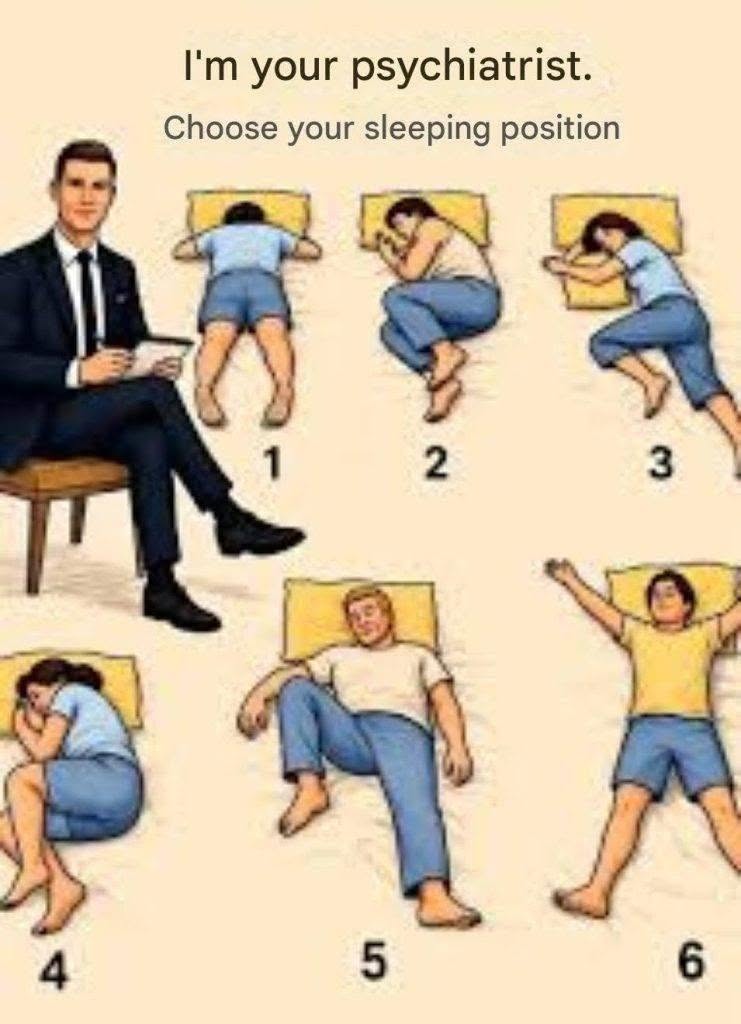
Position 1: Sleeping Face Down (The Freefall Position)
In the first position, the sleeper lies on their stomach with arms extended near or above the pillow.
This posture is commonly called the Freefall Position.
Popular Personality Interpretation
According to popular sleep psychology:
People who prefer this position are often described as:
Outgoing
Adventurous
Bold
Sociable
Confident
Energetic
Some personality guides suggest these individuals enjoy excitement and don’t shy away from new experiences.
However, beneath their confident appearance, they may also be sensitive to criticism.
Again, these descriptions are based largely on anecdotal interpretations rather than scientific evidence.
Health Considerations
Sleeping on your stomach can create challenges for the body.
Because your neck remains turned to one side for extended periods, some people experience:
Neck stiffness
Shoulder pain
Lower back discomfort
On the positive side, stomach sleeping may reduce snoring for certain individuals.
Position 2: Curled on the Side (The Classic Fetal Position)
The fetal position is one of the world’s most common sleeping positions.
The sleeper curls onto one side with knees bent toward the chest.
Popular Personality Interpretation
People who choose this position are often described as:
Kind
Thoughtful
Sensitive
Caring
Reliable
They may appear reserved when meeting new people but become warm and loyal once trust develops.
Many personality articles describe fetal sleepers as emotionally protective, preferring close friendships over large social circles.
Why It’s So Common
Sleeping on the side generally reduces pressure on the spine and can improve comfort for many people.
It is also frequently recommended during pregnancy.
Position 3: Side Sleeping with Arms Forward
In this variation, the sleeper lies on one side while stretching both arms outward.
Personality Interpretation
Popular descriptions suggest these individuals are:
Curious
Open-minded
Analytical
Thoughtful
Careful decision-makers
Some articles claim they enjoy exploring ideas before making important choices.
Although willing to consider different perspectives, they may take longer than others to reach final decisions.
Possible Health Benefits
Side sleeping often helps:
Reduce snoring
Improve breathing
Ease acid reflux
Support spinal alignment when using an appropriate pillow
Position 4: Tightly Curled Up
Position four resembles an exaggerated fetal position, with the body curled into a tighter ball.
Personality Interpretation
This position is often linked with people who are believed to be:
Highly empathetic
Introverted
Compassionate
Protective
Emotionally aware
Popular interpretations suggest they deeply value security and emotional connection.
Because they tend to think carefully before acting, they may avoid unnecessary conflict.
Psychological Perspective
While some articles associate tightly curled sleeping with stress or anxiety, posture alone cannot diagnose emotional health.
People may simply sleep this way because it feels warm and comfortable.
Position 5: Relaxed Side Sleeping