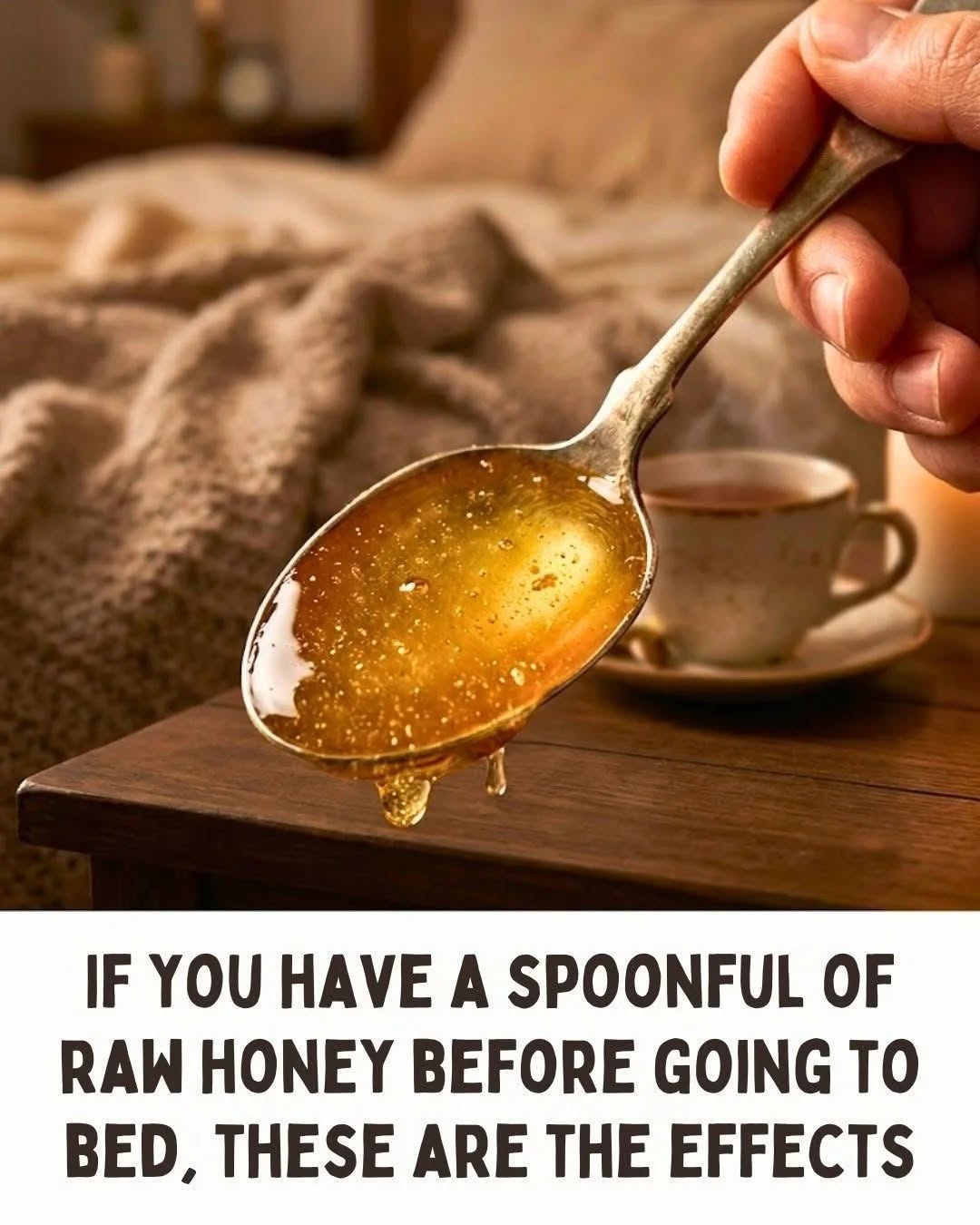
Replacing a larger dessert with a small amount of honey could reduce overall calorie intake for some people, but honey itself isn’t a fat-burning food.
If someone eats their normal dessert and then adds a spoonful of honey before bed, they’re simply adding more calories.
The overall diet matters much more than whether those calories come from honey.
The image specifically refers to raw honey.
Raw honey is generally honey that hasn’t undergone the same processing or filtration as many commercial products.
It may retain pollen and other natural components.
But “raw” doesn’t mean “medicinal.”
It doesn’t automatically make honey a cure for disease.
Different honeys have different characteristics, and quality can vary.
For a simple dietary use, the most important consideration is obtaining honey from a reliable source and using it appropriately.
Important: Never Give Honey to a Baby Under One Year
This is one of the most important safety rules involving honey.
Honey should never be given to infants younger than 12 months—even in small amounts.
The reason is the risk of infant botulism.
Honey can contain spores of Clostridium botulinum. Older children and adults generally have digestive systems that prevent these spores from causing the same problem, but an infant’s intestinal environment is different.
Infant botulism is rare but potentially serious.
Therefore, don’t put honey into a baby’s bottle, food, pacifier, or mouth.
This applies to raw honey and regular honey.
What About Adults?
For most healthy adults, honey is generally safe when consumed in moderate amounts.
However, there are still reasons to be sensible.
Honey is a concentrated source of sugar.
People who need to manage blood glucose should account for honey as part of their carbohydrate intake.
Replacing table sugar with honey doesn’t make the carbohydrates disappear.
Honey can still raise blood glucose.
People with diabetes or other conditions affecting blood sugar should consider portion size and their overall diet.
Honey and Dental Health
There’s another reason not to eat large amounts of honey immediately before bed.
Honey contains sugars, and sugars can contribute to tooth decay.
This is particularly relevant if someone eats honey and then goes straight to sleep without cleaning their teeth.
The mouth becomes a favorable environment for bacteria when fermentable carbohydrates remain on the teeth.
So if you regularly have honey at night, maintaining good oral hygiene is important.
Brushing with fluoride toothpaste before bed is one of the most valuable habits for protecting your teeth.
Don’t assume that a natural sweetener is automatically harmless to dental health.
How Much Honey Is Reasonable?
There is no universal requirement to take a specific amount before bed.
If you’re using honey simply to soothe a cough or throat, a small amount may be enough.
For children older than one year, medical guidance commonly discusses approximately ½ to 1 teaspoon for cough relief.