Some people choose to:
Trim especially dark areas
Rinse away surface blood or marrow stains
Pat the meat dry before cooking
If you rinse raw chicken, sanitize the sink and nearby surfaces immediately to prevent spreading bacteria through splashing water.
Most importantly, cook the chicken thoroughly until it reaches 165°F (74°C).
Food Safety Tips for Handling Poultry
Good handling habits are the best protection against foodborne illness. Keep chicken refrigerated below 40°F (4°C) and avoid letting it sit out too long during preparation.
Other important safety practices include:
Using separate cutting boards for raw meat
Washing hands thoroughly after handling poultry
Cleaning knives, counters, and sinks immediately
Using a meat thermometer instead of relying on appearance alone
Following proper food safety habits matters far more than small color changes.
How to Avoid Suspicious-Looking Chicken When Shopping
Buying high-quality poultry can reduce the chances of encountering unpleasant discoloration later.
When shopping:
Choose chicken from trusted stores with fresh inventory
Check sell-by or use-by dates carefully
Avoid damaged or leaking packaging
Look for well-sealed packages with consistent coloring
If you plan to freeze the chicken, do so promptly after purchase to maintain quality.
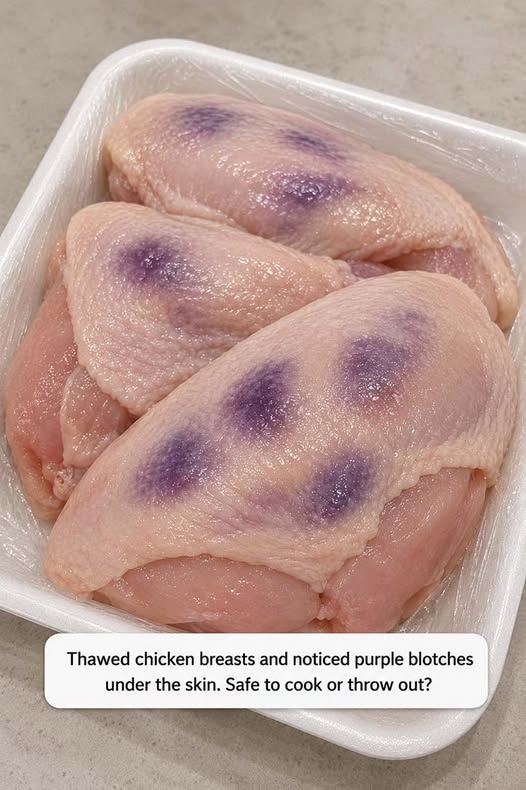
Purple blotches on thawed chicken may look alarming, but they are often harmless results of freezing, bone marrow leakage, or natural muscle pigments. The real indicators of spoilage are smell, texture, and unsafe storage conditions. By understanding what these color changes actually mean, you can make safer decisions in the kitchen without throwing away perfectly good food.