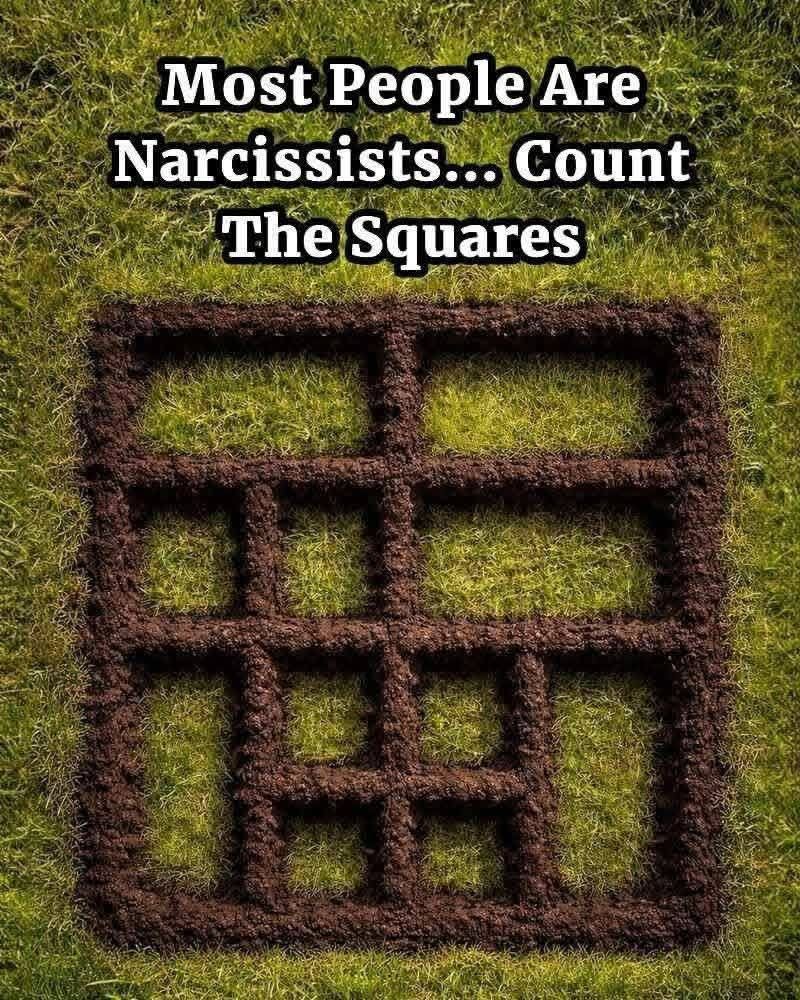
✨ Speed feels like intelligence: Quick answers signal competence (even when they’re wrong). ✨ Overconfidence blocks curiosity: If you’re sure you’re right, you don’t look deeper. ✨ Ego protects the first answer: Admitting you missed squares feels like admitting failure.
This isn’t about labeling anyone. It’s about awareness. We all have moments of overconfidence. The key is balancing confidence with humility—trusting yourself and staying open to learning.
💡 What This Puzzle Teaches Us About Life (Beyond Counting)
Here’s the beautiful truth: this simple puzzle is a metaphor for so much more.
🔹 The obvious isn’t always the complete: Life, like squares, has layers. What you see first is rarely the whole story.
🔹 Perspective changes everything: Step back, look closer, shift your angle—new squares appear. The same is true for problems, relationships, and opportunities.
🔹 Confidence without curiosity is limiting: Trust yourself, but stay humble. The moment you think you’ve seen it all is the moment you stop growing.
🔹 Mistakes are data, not failure: Missing squares doesn’t make you “bad at puzzles.” It makes you human. Every recount teaches you something new.
Frequently Asked Questions
How many squares are in a 4×4 grid?
A standard 4×4 grid contains 30 squares total: 16 (1×1) + 9 (2×2) + 4 (3×3) + 1 (4×4) = 30.
Is there a “right” personality type for this puzzle?
No! Each approach has strengths. Quick thinkers excel in fast-paced situations. Methodical counters thrive in detail-oriented work. Pattern seekers innovate. Self-doubters ensure quality. Diversity of thinking makes teams stronger.
Can I improve my puzzle-solving skills?
Absolutely! Practice helps. But more importantly: slow down, question assumptions, look for patterns, and embrace being wrong as part of learning.
Why do these puzzles go viral?
They’re deceptively simple, spark debate, and make us question our assumptions. Plus, everyone loves feeling smart (or discovering they’re smarter than they thought!).
Does getting the “right” answer matter?
Not really. The real value isn’t the number—it’s what you learn about how you think, how you handle uncertainty, and how you respond to being challenged.
A Gentle Reminder: You’re More Than a Puzzle Answer
Here’s what I hope you take away from this:
Your worth isn’t determined by how many squares you spot.
Whether you counted 10 or 30, whether you were confident or doubtful, whether you saw patterns or missed them entirely—you’re okay. You’re learning. You’re growing.
This puzzle isn’t a test of intelligence. It’s an invitation to self-awareness. To curiosity. To the humble recognition that there’s always more to see if we’re willing to look.
So the next time someone shares a “count the squares” challenge, don’t just count. Observe. Notice how you approach it. Notice what it makes you feel. Notice what it teaches you about yourself.
That’s where the real magic happens.
Your Turn: How Did You Do?
I’d love to hear from you!
🔹 How many squares did you spot?
🔹 Which counting style resonates with you?
🔹 Did this puzzle reveal anything unexpected about how you think?
Drop a comment below and share your experience. And if you think a friend who loves puzzles (or needs a gentle nudge toward self-reflection) might enjoy this, pass it along. Sometimes, the simplest challenges teach us the deepest lessons.
Here’s to counting squares, questioning assumptions, and discovering that the most interesting puzzles are the ones that help us understand ourselves a little better. 🧩