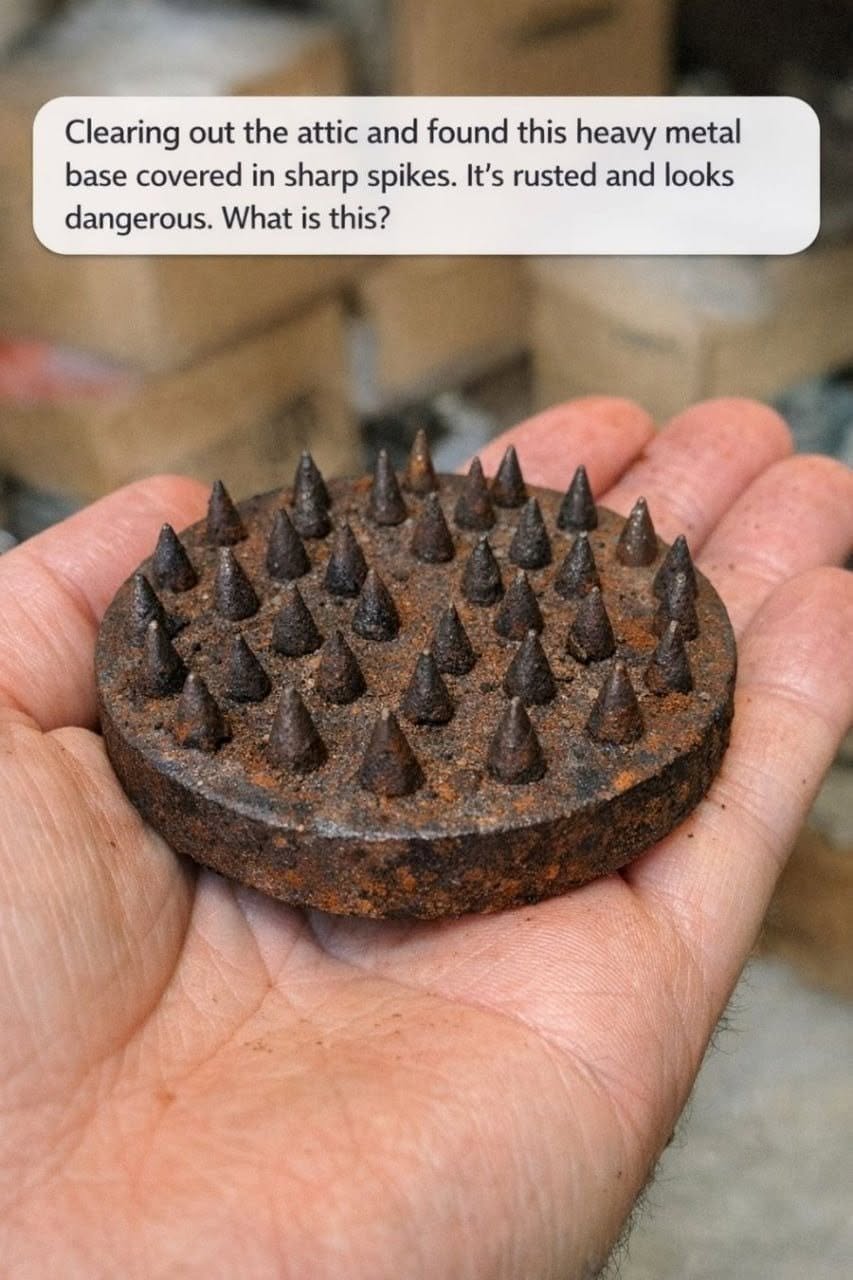
Break down tough material
Crush or perforate food before processing
Assist in grinding or softening fibers
In simpler terms, this was not a weapon.
It was a tool.
A very old, very efficient food-processing component.
How It Likely Worked
The explanation became clearer once someone described the mechanism it originally belonged to.
This disc would have been mounted inside a machine, possibly paired with a rotating or pressing system.
When material—most likely meat or fibrous food—was fed into the machine, the spikes would:
Pierce the surface
Break connective fibers
Loosen structure
Prepare it for grinding or further processing
Think of it as an early version of modern industrial food processors or meat tenderizing machines.
Before electric appliances became common, mechanical systems like this were essential in food preparation industries.
Why It Looked So Intimidating
Once I understood its purpose, something else became clear.
The reason it looked so unsettling wasn’t because it was dangerous in itself.
It was because we no longer recognize old industrial design language.
Modern tools are sleek.
Plastic.
Covered.
Safe-looking.
But older tools were not designed with aesthetics in mind.
They were designed with efficiency in mind.
Sharpness meant effectiveness.
Weight meant durability.
Iron meant longevity.
So to modern eyes, something purely functional can easily appear threatening.
The History Behind Objects Like This
Items like this spiked disc were commonly used in:
Butcher shops in the early to mid-1900s
Small industrial kitchens
Farming equipment for food preparation
Early mechanical grinding machines