2. Begin Light and Temperature Regulation
Christmas cactus is a short-day plant, which means it needs long nights and short
days to initiate blooming.
September is the time to start adjusting light and temperature to trigger this process.
Light Requirements in September
12–14 hours of darkness: Place your plant in a room where it naturally gets long nights. Alternatively, cover it with a dark cloth or box from evening to morning.
Bright indirect light during the day: Set your cactus near an east- or north-facing window where it gets filtered daylight without direct sun.
Temperature Needs
Cool nights (50–60°F / 10–15°C): Exposure to slightly cooler night temperatures encourages bud formation.
Warm days (65–70°F / 18–21°C): Keep daytime temperatures mild to prevent stress.
Pro Tips
Avoid placing the plant near heat vents, radiators, or drafts – these sudden changes can make it drop buds.
If nights are naturally cool in your region, you can move the cactus outdoors for a few weeks (but bring it inside before frost).
3. Transition
Fertilizing for Bud Formation
Nutrition plays a critical role in preparing your Christmas cactus for blooming. September is when you shift from growth fertilizer to bloom booster.
Fertilizer Schedule in September
Stop high-nitrogen feeding: Fertilizers rich in nitrogen encourage leaf and stem growth, which you don’t want now.
Switch to phosphorus and potassium: Use a fertilizer with a ratio like 5-10-10 or 2-7-7, which promotes strong flower bud development.
Frequency: Feed every 2–4 weeks until late October, then stop until after blooming.
Why This Works
Phosphorus: Stimulates flower bud initiation and enhances bloom quality.
Potassium: Strengthens the plant and helps sustain prolonged blooming.
Homemade Fertilizer Hack
Mix banana peel water (rich in potassium) and a pinch of Epsom salt (provides magnesium, essential for chlorophyll production).
Use this as a natural fertilizer once a month.
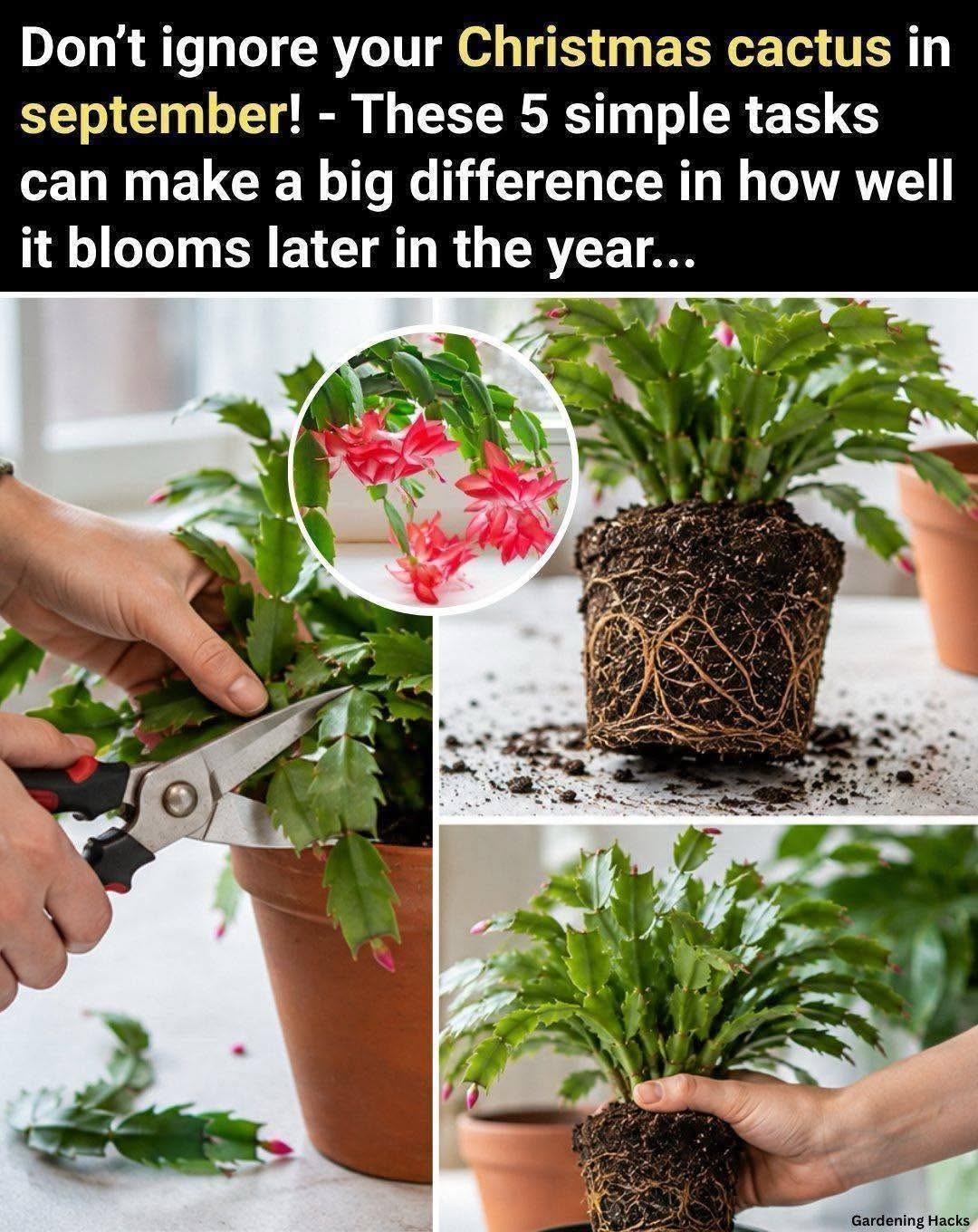
4. Prune and Repot Strategically (If Needed)
September is also the last chance to do light
pruning or repotting before blooming season.
Pruning
Why prune: Trimming leggy stems encourages branching, which leads to more flowers per plant.
How to prune: Use clean scissors to snip 1–2 segments off the ends of each stem. You can root these cuttings in fresh soil to grow new plants.
Repotting
When to repot: Only repot if your cactus is rootbound or the soil is old and compacted.
Potting mix: Use a loose, well-draining mix (equal parts potting soil, perlite, and orchid bark works well).
Pot size: Choose a container only slightly larger than the current one; Christmas cactus blooms best when slightly rootbound.
Warning
Avoid heavy pruning or repotting too late in September, as this can stress the plant and prevent it from setting buds.
5. Create a Rest Period to Trigger Blooms
Perhaps the most overlooked step in September is giving your plant a resting phase. This “quiet time”
helps redirect the plant’s energy from foliage growth to flower production.
How to Provide Rest